
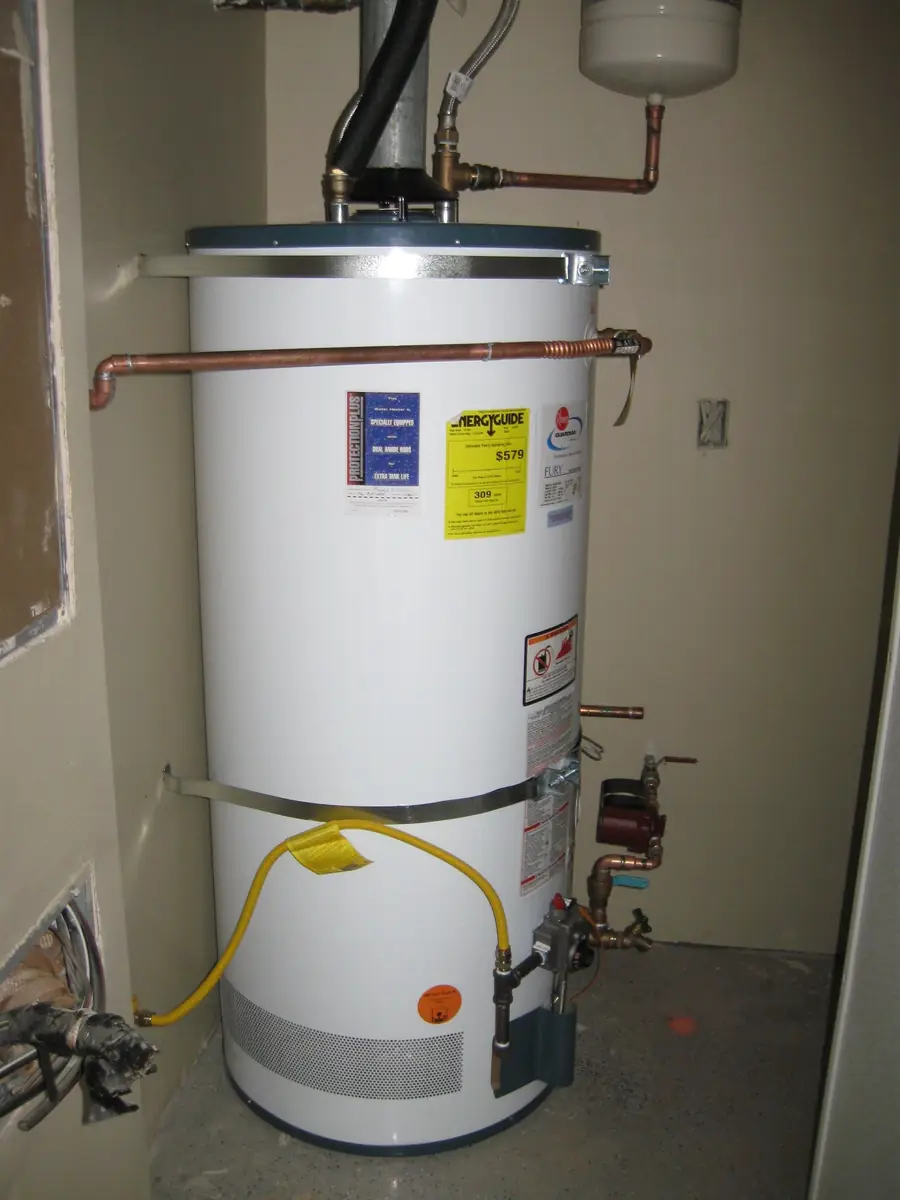
Water heater tanks are not usually on our to do list in the home as far as maintenance. But did you know that your water heater could be the single most dangerous component in your home if it malfunctions? The TPR (temperature and pressure relief) valve if not functional or bad can cause the tank to hold inordinate amounts of pressure in the unit, causing the unit to leak at a weak point or to even explode! Don’t believe it? Look up the Mythbusters episode where a water heater launches straight through a roof.
After seeing a water heater blow through a roof, hopefully you will have a newfound respect for your water heater. Your TPR valve can be tested by first turning the cold water off to the unit. You will then pull the pressure valve switch about halfway and let it go allowing it to close again. You should hear a slight rush of air or gurgling sound when doing this test on the TPR valve. If it closes properly as described it appears to be sound and has passed the test for safety. On many older homes and even some newer homes, homeowners cap these valves off if they notice them leaking instead of replacing or repairing this part, which is an inexpensive part. Remember, they are installed for a very specific purpose, to keep your water heater from exploding!
Not comfortable doing this yourself or unsure if the installation is proper? Contact us!
This, however, isn't the only maintenance you should be doing annually or semi-annually on your water heater. Our area is known for having hard water and mineral build up. At least once a year you should be flushing the water heater. This is done by first turning off your electric to the water heater, a labeled circuit breaker in your main electrical panel. If your water heater is gas turn the gas switch to the pilot position. Very important to make sure the energy source is off or you could really damage the unit. Next you will turn off your cold water supply to heater, stopping the water flow from the plumbing system. On the lower end of your water heater you will see the drain valve where a garden hose can be connected. Run the hose to either the outside of home or a bathtub for drainage, keeping in mind the water discharging from the unit during a flush-out will be scalding hot, doing so with care and safety in mind. Open the TPR valve at top of unit and also open the drain valve where you have just connected your garden hose.
The water heater will drain completely this way. When done close both valves again and disconnect your hose. Turn a hot water faucet on in home and open the cold water valve on top of heater that was originally closed. The unit will fill up and once you have water flow at open hot water faucet you are good to go and done with your flush-out and refill. Your last step will be to turn on the energy source, whether it be gas or electric. Simple stuff that is a big part of your homes maintenance. Another part of a water heater that can be monitored is the “Anode Rod”, a metal rod installed down into inside of water heater tank which is there to attract the natural corrosion inside unit, keeping them from the walls and other components.
This Anode Rod can be removed every five years to check for its breakdown and appearance. Tank should be empty when inspecting this component. If located in unit it can be accessed from the top of the tank, removing straight up and out.
In today's market there are also “Tankless” water heaters as well, a system of heating lines the water runs through with no tank. Tankless units typically last around 20 years with regular maintenance, longer than most tank-style heaters, if the cost and gas or electrical supply work for your home.
Remember, if you're not comfortable servicing your water heater you can always reach out to us or any licensed and knowledgeable plumbing contractor to help keep you and your family safe!